You love pickleball. You play three times a week, you have a bag full of paddles, and you have definitely dragged at least one friend into the sport. Then someone mentions padel, and you think: wait, is that just pickleball with a different accent?
Not quite. The two sports share some surface-level similarities: both are played with solid paddles, both are doubles-friendly, and both are growing fast in the US. But once you step onto a padel court for the first time, the differences become very obvious very quickly. This guide breaks down exactly how the two sports compare, so you can decide whether padel deserves a spot on your court schedule.
What Is Pickleball?
Pickleball is a paddle sport played on a small court, roughly the size of a doubles badminton court, with a plastic wiffle ball and solid paddles. It was invented in 1965 in the US and has exploded in popularity over the last decade. The game is known for its accessibility, its social scene, and its signature kitchen rule, which keeps things strategic near the net.
What Is Padel?
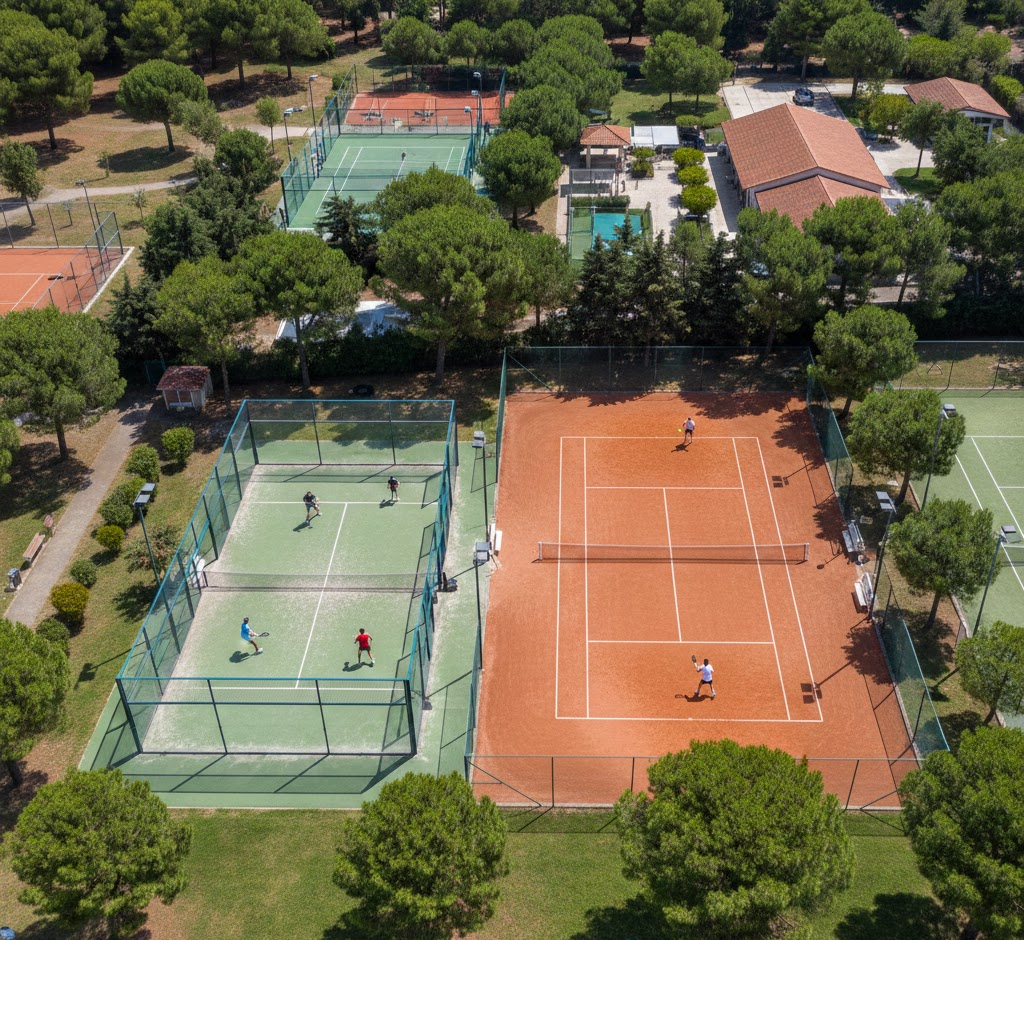
Padel is a racket sport played inside a fully enclosed glass and metal court, roughly twice the size of a pickleball court. Players use solid, perforated rackets with no strings and a pressurized felt ball similar to a tennis ball. Padel originated in Mexico in 1969, spread through Spain and Latin America, and is now one of the fastest-growing sports in the world. The walls are a core part of the game, not just a backdrop.
How the Two Sports Compare
The Court
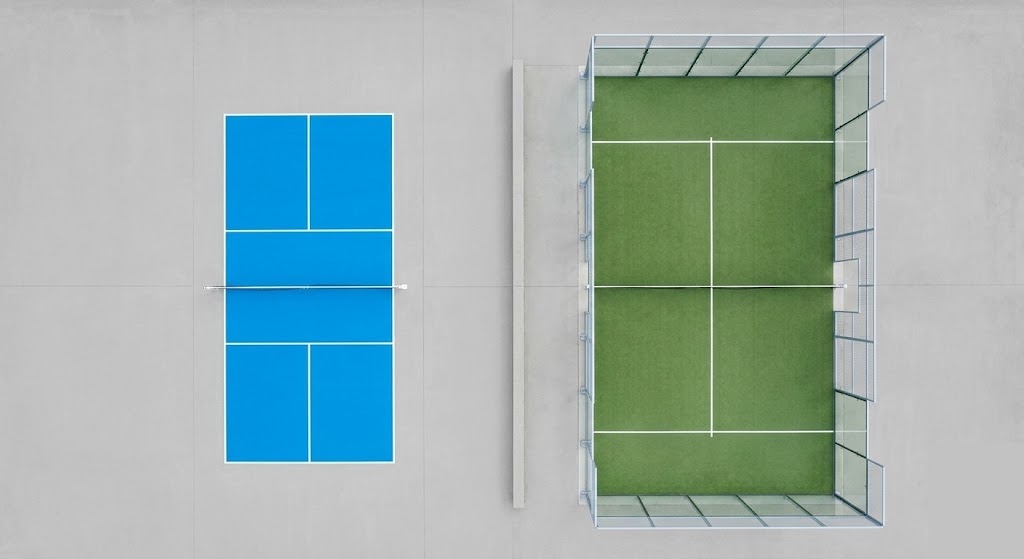
The pickleball court is 44 feet long and 20 feet wide. It is painted on a flat hard surface, often an old tennis court, and has a low net in the middle. There are no walls. Everything that goes out of bounds is simply out.
A padel court is 65 feet long and 32.5 feet wide and completely enclosed by glass walls and metal mesh fencing. Those walls are not just cosmetic. The ball can bounce off them and stay in play, which completely changes the tactical nature of the sport. You are not just hitting into open space. You are reading angles, using the glass like a snooker player uses the cushion, and covering a lot more ground than you do in pickleball.
The Racket
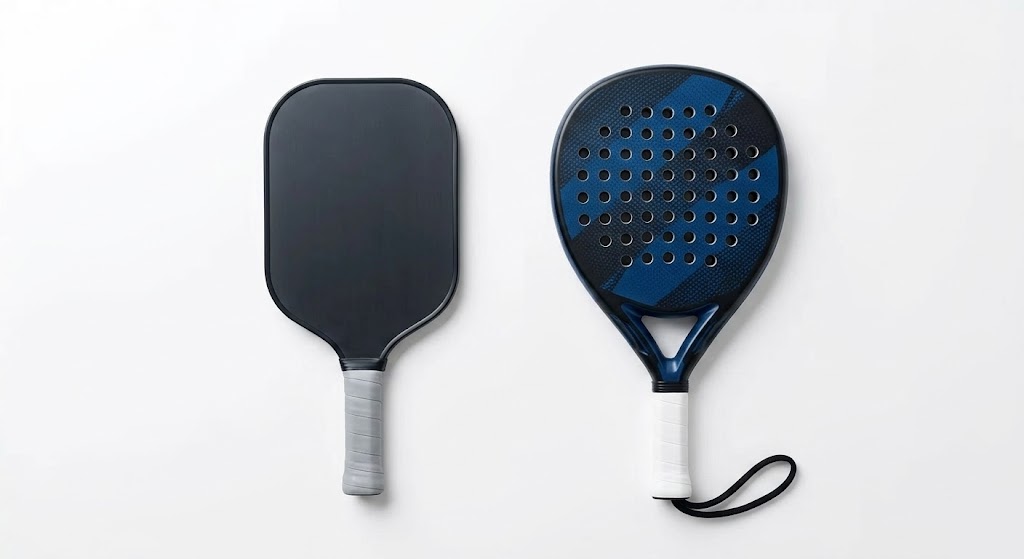
Pickleball paddles are solid, smooth-faced, and roughly the shape of a large table tennis paddle. They can be made from graphite, carbon, or composite materials, and the rules specify size limits for both length and width combined.
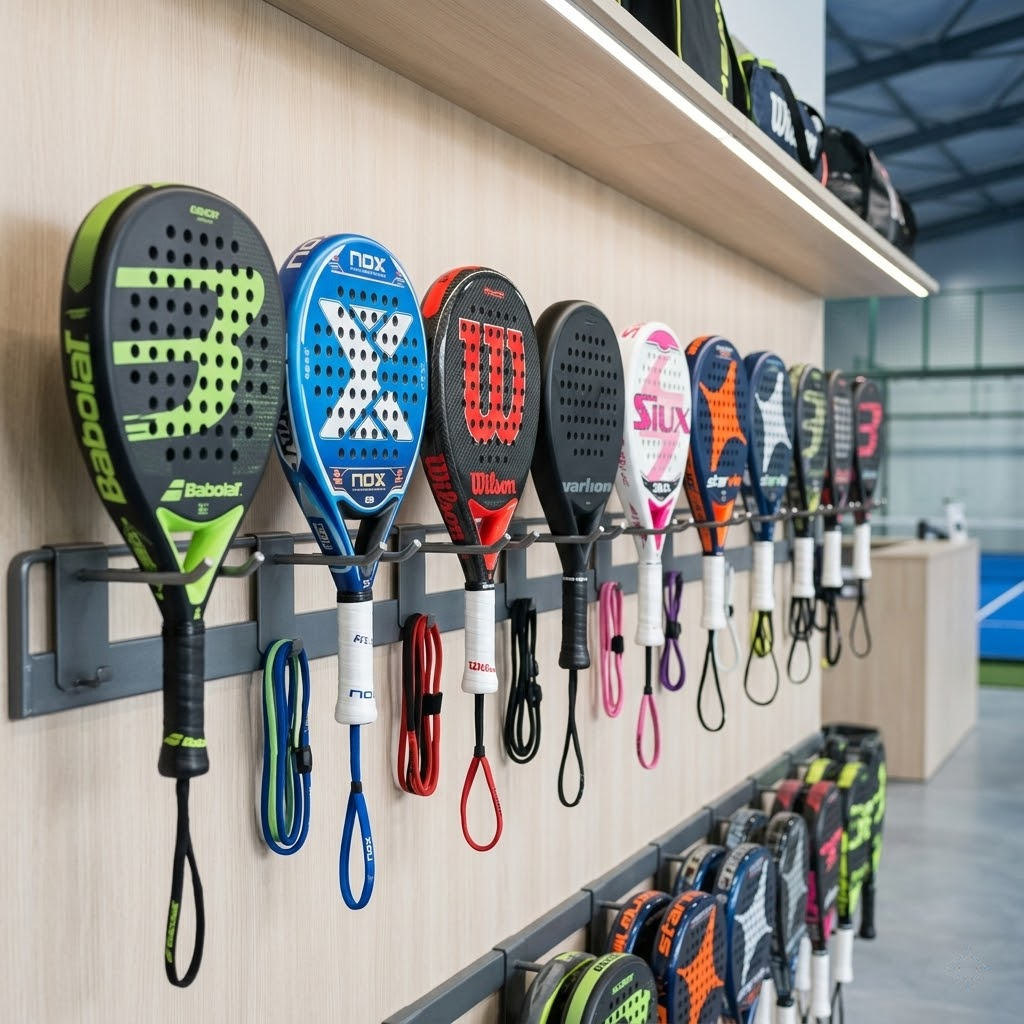
Padel rackets are thicker, heavier, and perforated with holes across the hitting surface. They have no strings. The holes reduce air resistance and affect how the ball responds on contact. Padel rackets come in three main shapes: round, teardrop, and diamond, each suited to a different playing style. You cannot use a pickleball paddle in padel, and vice versa. They are genuinely different tools built for genuinely different games.
The Ball
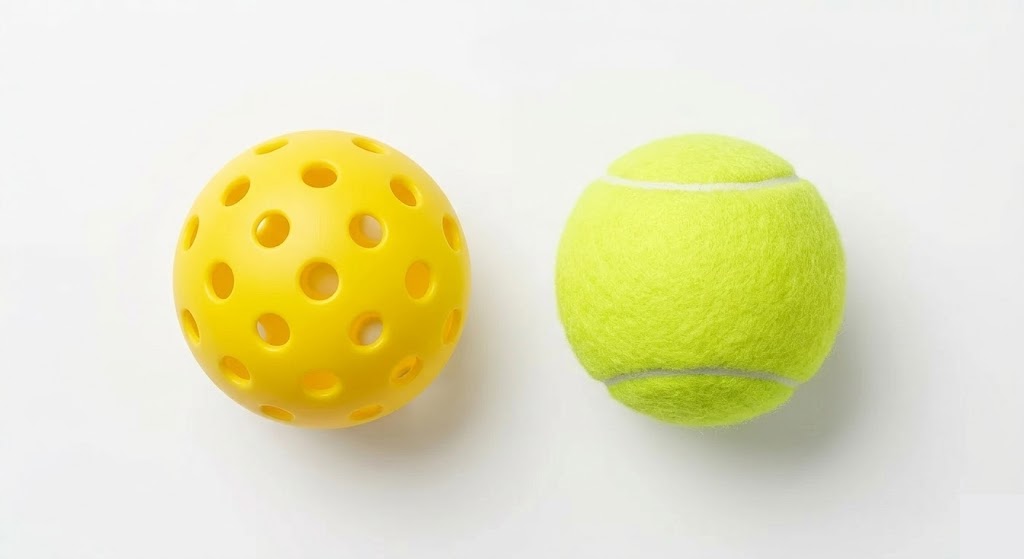
This is where the sports diverge most obviously in feel. Pickleball uses a hollow plastic ball with holes drilled through it, which produces a low, somewhat unpredictable bounce and a distinctive clicking sound that pickleball courts are famous for generating at 7am in residential neighborhoods.
Padel uses a pressurized felt ball that looks and feels like a slightly deflated tennis ball. It bounces higher and travels faster than a pickleball, and the felt grips the strings of the glass in a way that affects pace and angle when the ball bounces off the walls. The padel ball is a much livelier object, and it makes the game feel faster once you get used to it.
The Scoring
Pickleball scoring has some quirks of its own. Most recreational games are played to 11 points, win by two, and only the serving team can score a point. It is simple and keeps games moving.
Padel uses traditional tennis scoring: 15, 30, 40, game, sets, and matches. Games are typically played as best of three sets, with each set going to six games. If a set reaches six games apiece, a tiebreak is played. The scoring system is more complex, takes longer to get your head around, and means a match can last significantly longer than a pickleball game. For newcomers, the scoring is often the biggest learning curve.
The Serve
In pickleball, the serve is hit diagonally from behind the baseline, underhand, and must land in the opposite service box. The kitchen rule means you cannot volley the return of serve. Serving is functional but relatively low-stakes in recreational play.
In padel, the serve is underhand and bounced before being struck, similar to a squash serve. It must land in the diagonally opposite service box. There is also a key rule about walls: the ball can hit the side walls or back wall after bouncing in the service box, but there are specific restrictions on what happens next. The padel serve is not an aggressive weapon like a tennis serve, but it requires more awareness of court geometry than a pickleball serve does.
The Social Aspect
Here the two sports are genuinely alike. Both are primarily doubles games. Both have built enormous social communities around them in a short period of time. Both attract a wide age range and are regularly described by players as the most fun they have had on a court. If you love the social side of pickleball, you will feel very at home in padel culture.
Which One Is Easier to Learn?
Pickleball is probably easier to pick up in the first session. The court is smaller, the ball is slower, the scoring is straightforward, and the kitchen rule creates natural structure for beginners. Most people can have a genuinely enjoyable game within an hour of picking up a paddle for the first time.
Padel has a steeper initial learning curve, mostly because of the walls. Reading wall bounces is a skill that takes time to develop, and until you have it, the game can feel chaotic. The scoring system also adds cognitive load early on. That said, most beginners find that after two or three sessions, something clicks. The walls stop feeling unpredictable and start feeling like an opportunity, and the game opens up considerably.
Both sports reward continued play and improvement. Neither is so hard that beginners feel unwelcome.
Can Pickleball Players Pick Up Padel Quickly?
Yes, faster than most. The hand-eye coordination, net awareness, and doubles instincts you build in pickleball transfer directly to padel. Dinking and volley play are different but the underlying reflexes are the same. Pickleball players also tend to understand court coverage and partner communication intuitively, which gives them a head start.
The adjustment areas are predictable. The walls will catch you off guard at first. The ball travels faster. The scoring takes getting used to. And the racket feels heavier than a pickleball paddle. But experienced pickleball players typically find their footing in padel faster than complete beginners do, and many end up playing both regularly without feeling like one undermines the other.
Frequently Asked Questions
Is padel harder than pickleball?
For most people, yes, initially. The walls add a layer of complexity that pickleball simply does not have, and the tennis-style scoring takes more time to internalize. But padel is not hard in a discouraging way. Most players who stick with it for a month find it no harder than pickleball felt in the first week.
Can I use a pickleball paddle for padel?
No. A pickleball paddle is too light, too thin, and not designed for the pressurized padel ball. If you want to try padel, you will need a proper padel racket. Many courts rent them, so you can try before you buy.
Which sport is growing faster?
Both are growing rapidly, but padel is growing faster globally. It is already the second most played sport in Spain and has hundreds of millions of players worldwide. In the US, pickleball has a head start, but padel is expanding quickly, particularly in major cities where purpose-built courts are opening regularly.
Is padel more expensive than pickleball?
It can be. Court time for padel typically costs more since padel courts are purpose-built enclosed structures that cost more to maintain. Entry-level padel rackets are also pricier on average than entry-level pickleball paddles. That said, padel can absolutely be played on a budget, especially as more courts open and prices become more competitive.
Which sport is better for beginners?
Both are excellent entry-level sports, and the better choice depends on what you enjoy. If you want instant gratification and a very gentle learning curve, start with pickleball. If you want a sport with a bit more tactical depth and a faster pace, padel will hook you quickly once you get past the first few sessions.
Why You Should Try Padel If You Love Pickleball
If pickleball already has you hooked on the combination of social doubles play, fast reflexes, and the satisfaction of a well-placed net shot, padel will feel like a logical next step rather than a completely foreign experience. The DNA is similar enough that the transition feels natural. The differences are interesting enough that it feels like a new challenge.
Padel is not a replacement for pickleball. Plenty of players enjoy both. But if you have ever watched someone describe padel with genuine enthusiasm and wondered what they are going on about, this is your invitation to find out.
To understand the full rules before your first session, our Padel Rules for Beginners guide has everything you need.