Picture this: you have been playing squash for years and someone at your club tells you to try padel. Or you just discovered padel and someone asks how it compares to squash. Either way, you are wondering whether these two sports are actually similar or just look that way from a distance. Padel vs squash is a fair comparison on the surface.
Both are racket sports. Both are played in enclosed courts. Both use the walls as part of the game. But spend five minutes on each court and you will quickly realise they are very different animals. The feel, the equipment, the tactics, the fitness demands, and the social culture are all distinct. This article breaks down exactly what separates them so you can figure out which one deserves your time, or whether both do.
The Court
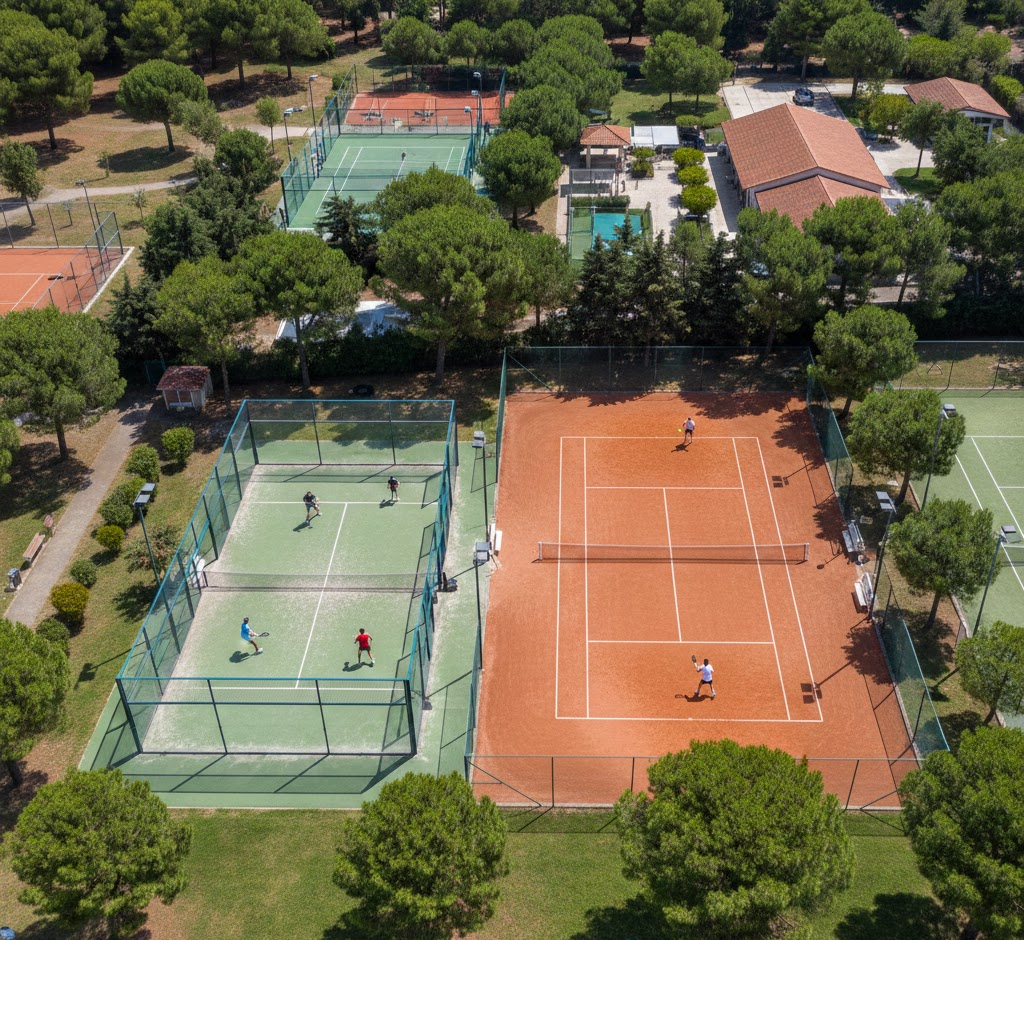
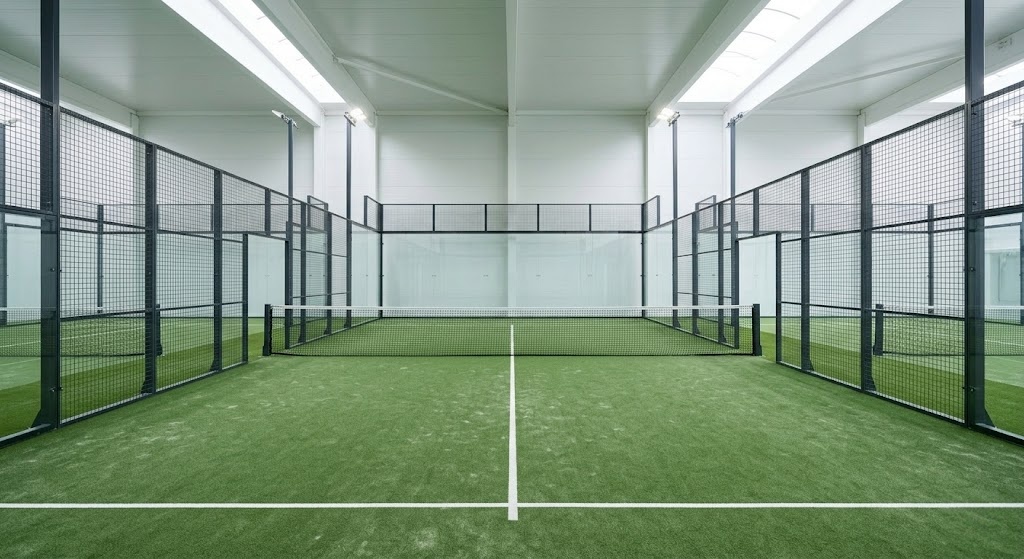
The padel court is 10 metres wide and 20 metres long, enclosed by a combination of glass panels along the back and sides and metal mesh above them. Walls are in play, just like squash. The court can be indoors or outdoors, and many padel facilities are open-air with a roof overhead. There is a net running across the middle, and the overall feel of the space is bright, open, and visible from the outside. Friends and teammates watching from behind the glass is part of the padel experience, which contributes to its social atmosphere.
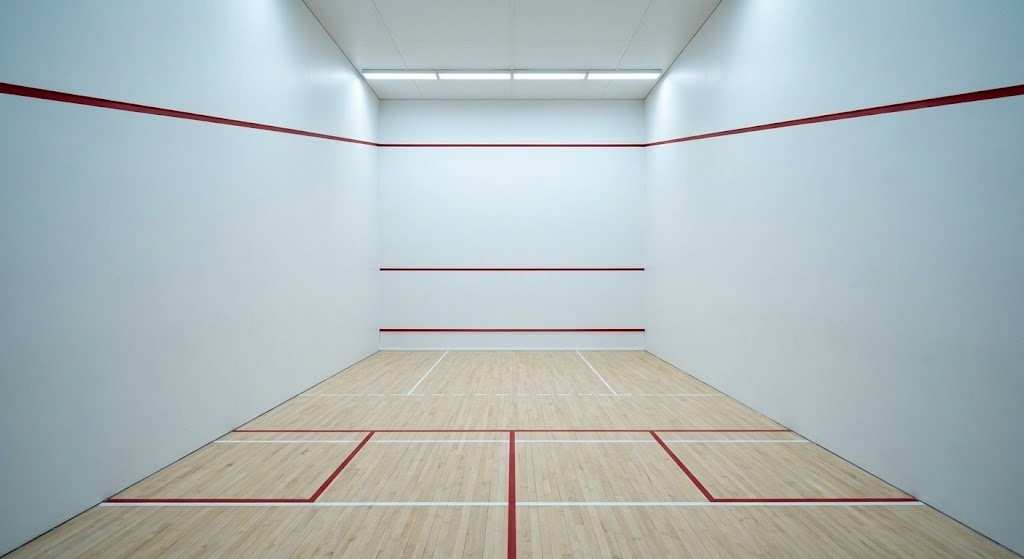
The squash court is considerably smaller: 6.4 metres wide and 9.75 metres long. It is fully enclosed with four solid walls, always indoors, and entirely self-contained. There are no glass panels on a traditional squash court, though modern showcase courts sometimes have them for spectating. The space feels tight and intense in a way that padel never does. Rallies unfold in close quarters, the ceiling is low, and the confined dimensions put players under constant physical pressure.
The key practical difference is feel. A padel court is airy and social. A squash court is claustrophobic in the best possible way, a pressure chamber that demands constant movement and quick reactions.
The Racket and Ball
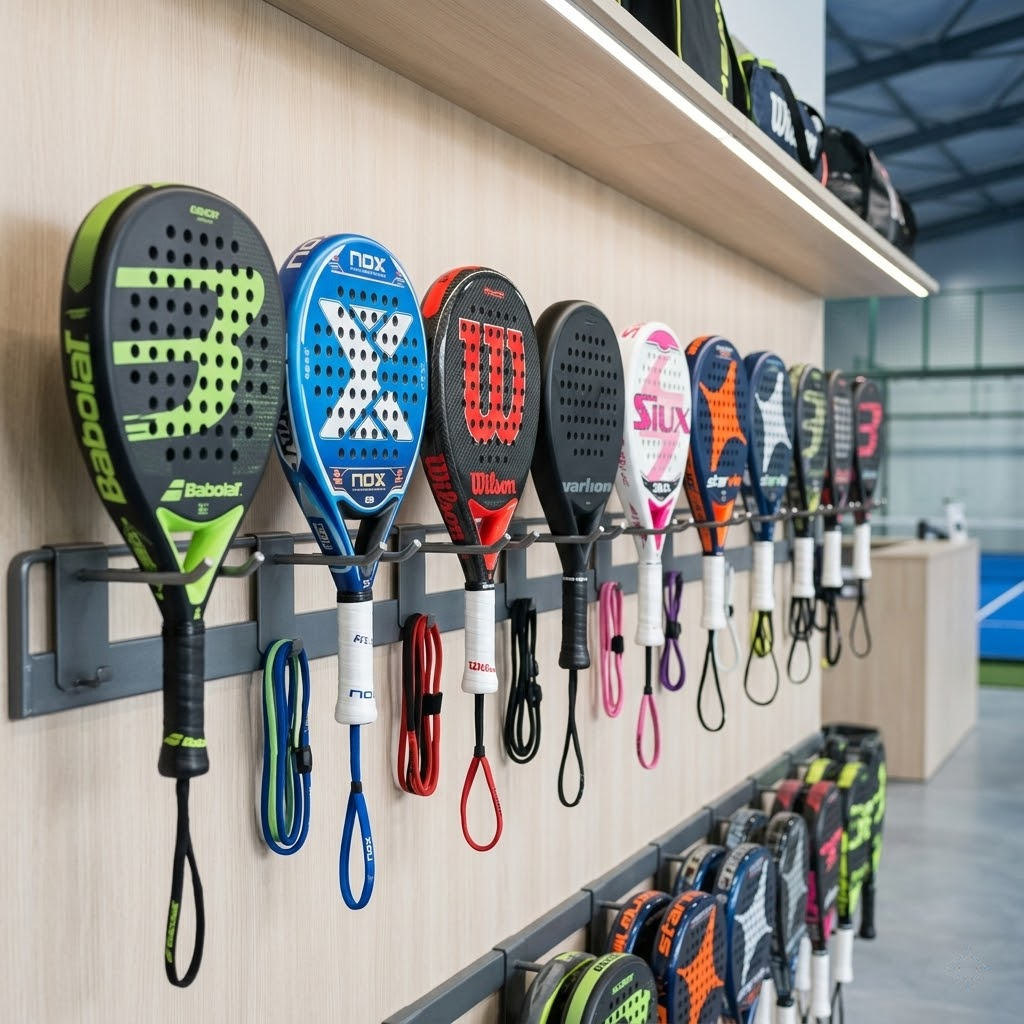
Padel rackets are solid. No strings. The face is a rigid perforated surface, usually made from carbon fibre or fiberglass, and the whole racket weighs around 360 to 380 grams. The handle is shorter than a tennis racket and the head is roughly oval. It feels sturdy and substantial in the hand.
Squash rackets are strung, much like a tennis racket but lighter and longer in the handle. A typical squash racket weighs around 130 to 170 grams, less than half the weight of a padel racket. The frame is narrow and the head is teardrop-shaped. Picking one up after holding a padel racket feels almost weightless.
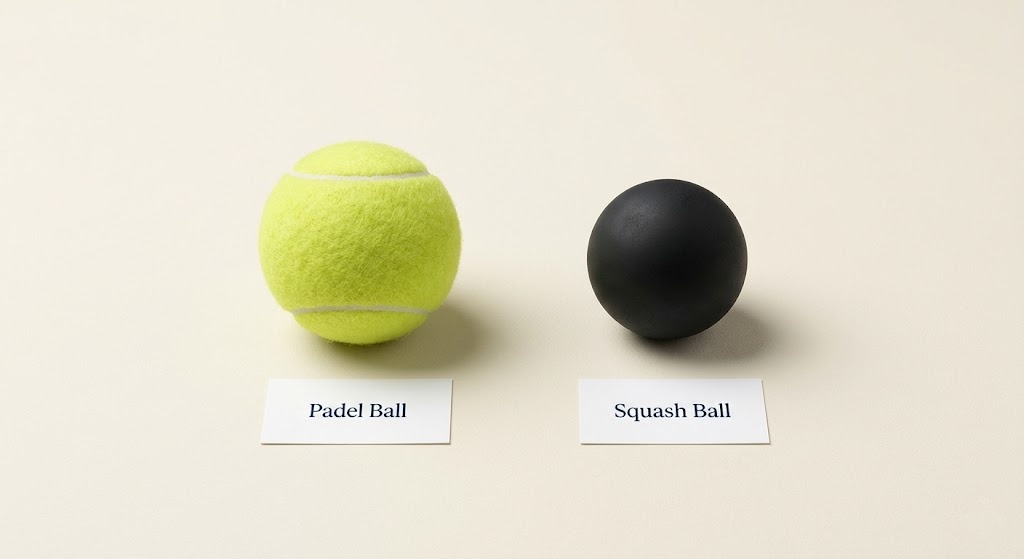
The balls are equally different. A padel ball looks similar to a tennis ball but is slightly less pressurised and bounces lower. It behaves predictably and does not require any warm-up. A squash ball is a small, hollow rubber sphere that barely bounces at room temperature. Players have to rally it against the wall for several minutes before it warms up enough to play properly. Cold squash balls effectively do not bounce at all, which is a genuine surprise the first time you encounter one.
The equipment difference shapes everything about how each sport plays. A heavy solid racket hitting a low-bounce ball produces a completely different experience from a featherlight strung racket hitting a rubber dot that changes behaviour with temperature.
How You Play
The biggest similarity between padel and squash is the walls. In both sports, the ball can rebound off the walls and remain in play. That shared DNA is what makes squash players pick up padel instincts faster than most other athletes. The sense of angles, the habit of watching the ball all the way through a wall rebound, the instinct to use the back wall strategically: all of that transfers.
Everything else diverges pretty quickly. Padel is almost always played in doubles, four players on the court at once. Squash is almost always singles, two players in an intense one-on-one battle. Padel rallies tend to be longer, with lob play, back wall setups, and patient positioning. Squash rallies are faster, tighter, and more physically relentless in a confined space.
The serve is different too. In padel, the server stands behind the service line, bounces the ball once, and hits it underhand below waist height diagonally into the opponent’s service box, just like tennis but underhand. In squash, the server hits the ball above the service line on the front wall and into the opposite quarter of the court. It is a very different ritual.
Scoring is where the two sports part ways completely. Padel uses the same system as tennis: 15, 30, 40, deuce, game. Sets go to six games, matches are best of three. Squash uses point-a-rally scoring to 11, meaning every rally produces a point regardless of who served. Squash games are quicker to conclude but can feel more relentless because there is no padding of the score with service advantages.
Fitness and Physical Demands
Squash has a reputation as one of the most physically demanding sports in the world, and it has earned it. The confined space means players are constantly sprinting short distances, changing direction sharply, and lunging for shots in every corner of the court. There is very little rest in a competitive squash rally. Heart rates stay elevated for extended periods, and a serious squash match will leave most players completely spent.
Padel is genuinely physically demanding, but it is more accessible. Because it is played in doubles on a larger court, you cover less ground per point. Rallies have more structure and breathing room. The lob-heavy style of play at recreational level means there are moments to reset and reposition. That does not make padel easy. A long padel match in warm conditions is a serious workout. But the intensity per minute is generally lower than squash.
For older players, returning athletes, or anyone managing joint issues, padel is often the more sustainable choice. The lower-impact nature of the movement and the shared court load in doubles make it easier on the knees and hips over time. Squash, with its explosive short sprints and hard court surface, is harder on the body long-term.
Padel vs Squash: Which One Should You Try?
This comes down to what you actually want from a sport.
If you are after something social, accessible, and fun from the very first session, padel wins comfortably. The learning curve is gentle, the format is built for groups, and the glass-enclosed courts create a natural social environment. Padel is also growing fast in the US right now, which means finding courts and communities is getting easier every month.
If you want a brutal solo workout and thrive on the mental chess of a fast, confined sport, squash is hard to beat. It will challenge your fitness in ways that padel simply does not, and the one-on-one dynamic creates a particular kind of competitive pressure that some players find deeply satisfying.
If you already play squash, your wall instincts will serve you well in padel. The transition is smoother than you might expect, particularly your reading of angles and rebound trajectories. If you already play padel and you try squash, expect your legs and lungs to be tested in ways that feel surprisingly unfamiliar.
Both sports are worth experiencing. They share a family resemblance but scratch very different itches.
Frequently Asked Questions
Is padel easier to learn than squash?
Yes, for most people padel has a shorter learning curve. The larger court, the doubles format, and the lower-bounce ball make it more forgiving in the early stages. In squash, the small court and fast ball demand quick footwork and technique from the start. Most beginners are enjoying competitive padel rallies within a few sessions, whereas squash tends to take longer to feel comfortable.
Can squash players pick up padel quickly?
Squash players tend to adapt to padel faster than most newcomers because their wall instincts transfer well. Reading ball angles off the glass, positioning relative to the back wall, and staying patient during long rallies are all habits that carry over. The main adjustment is the heavier racket, the doubles format, and the different scoring system.
Is padel or squash more popular?
Globally, padel is growing faster and has a larger total player base, with over 35 million players worldwide as of 2025. Squash has an older and more established competitive structure but has been relatively flat in participation growth over the past decade. In the US specifically, padel is the newer and faster-growing option, while squash has a longer-established club and collegiate presence.
Are the courts the same size in padel and squash?
No, they are quite different. A padel court is 10 metres wide and 20 metres long. A squash court is 6.4 metres wide and 9.75 metres long. Squash courts are significantly smaller and fully enclosed with solid walls, while padel courts use glass and mesh and feel much more open. A padel court is roughly three times the area of a squash court.
Which sport is a better workout, padel or squash?
Squash is generally considered the more intense workout per minute. The confined space, constant movement, and point-a-rally format keep heart rates elevated throughout. Padel is a solid workout, particularly in longer matches, but the doubles format and larger court mean less total ground covered per session. For pure cardiovascular intensity, squash has the edge. For a sustainable, joint-friendly workout you can do regularly over many years, padel is often the better long-term choice.
Wrapping Up
Padel and squash share some real DNA: walls, enclosed courts, rackets, and fast rallies. But they play very differently. Padel is social, accessible, and growing fast across the US. Squash is intense, individual, and deeply established in club and collegiate culture. One is not better than the other. They just suit different people and different moods.
If you are reading this on PadelGuide, you are probably leaning toward padel. A good place to start is our Padel Rules for Beginners guide to get your head around the game, and our Best Padel Rackets for Beginners in 2026 if you are ready to pick up your first racket.
Disclosure: PadelGuide is reader-supported. Some links on this page are affiliate links, which means we may earn a small commission if you make a purchase at no extra cost to you. We only recommend products we genuinely believe in.