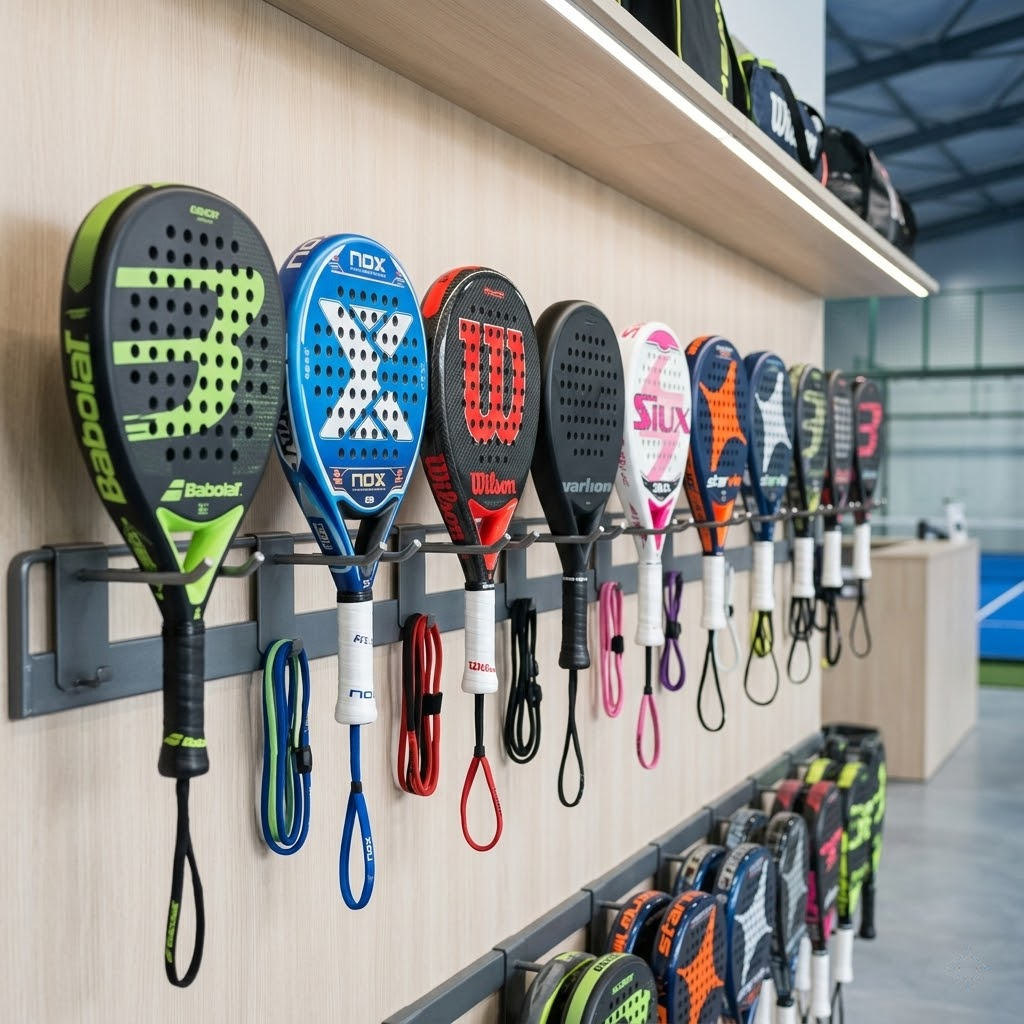
You open up a padel gear website for the first time. There are hundreds of padel rackets. Some are round, some are diamond-shaped, some are a weird in-between shape nobody has given you a name for. The descriptions mention carbon fibre, EVA foam, high balance, low balance, soft cores, hard cores. The prices range from $60 to $500. You have no idea what any of it means or where to start.
So you close the tab and go back to borrowing your friend’s spare racket.
Sound familiar? You’re not alone. Padel is a sport that’s grown incredibly fast, and the equipment market has exploded with it. Walking into that world as a beginner without a guide is genuinely overwhelming. The good news is that once you understand a few key things, the choice becomes much simpler. And for a beginner, the right racket is actually pretty easy to identify.
Does Racket Choice Actually Matter for Beginners?
Honestly, less than the marketing would have you believe. In your first few months of padel, your technique, footwork, and understanding of the game will improve dramatically regardless of what you’re holding. No racket is going to shortcut that learning process.
That said, the wrong racket can make things harder. A heavy racket will tire your arm out faster and slow down your reactions at the net. A racket with a high balance point makes control harder to develop. A stiff carbon face will punish off-centre hits and give you less feedback on where the ball is making contact. These things matter when you’re still learning.
So while you don’t need an expensive racket, you do want the right kind of racket. They’re not always the same thing.
What to Look For
Shape
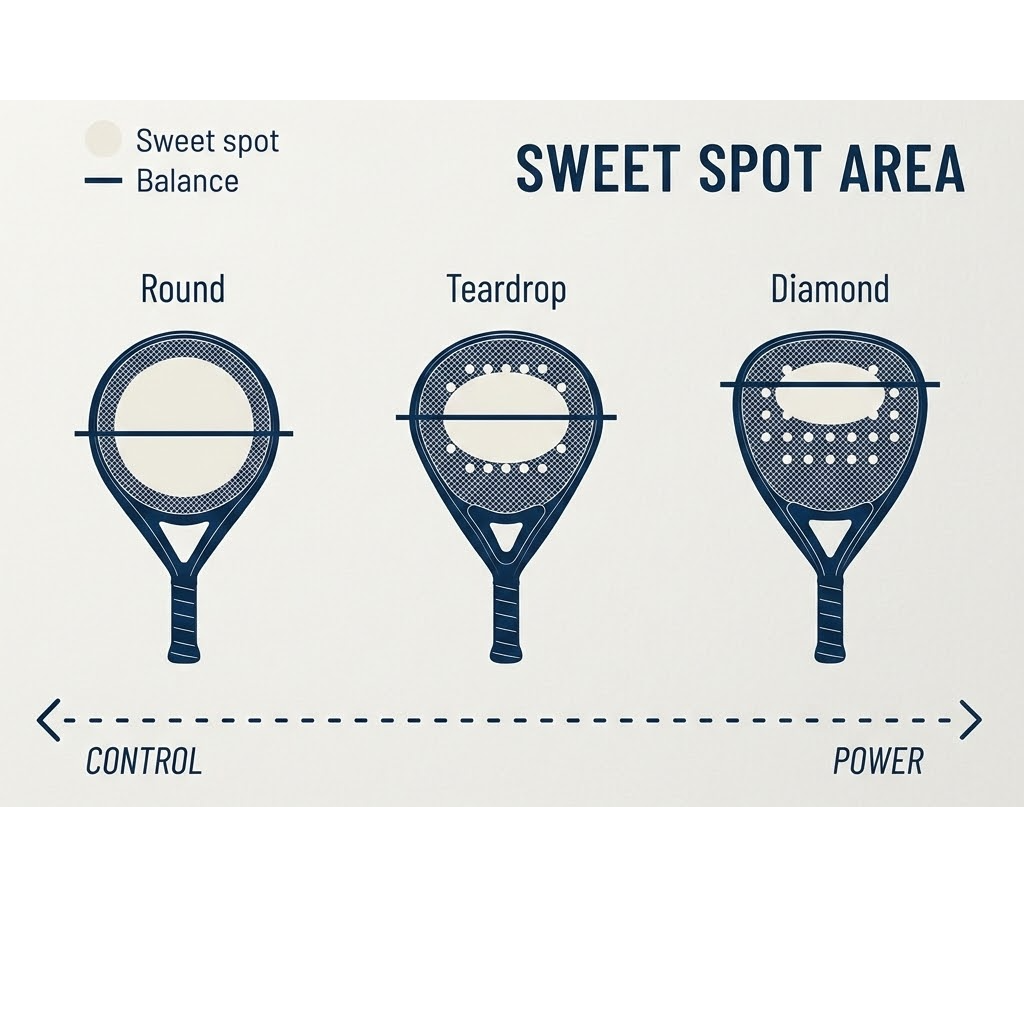
Padel rackets come in three main shapes: round, teardrop, and diamond.
Round rackets have a wide sweet spot that sits in the middle of the face. Because the sweet spot is large and centred, off-centre hits are more forgiving. You don’t need to hit the ball perfectly to get a decent result, which makes round rackets far more suitable for beginners who are still developing consistency.
Diamond rackets are the opposite. The sweet spot sits high up near the top of the face, which generates a lot of power when you hit it right. The problem is that when you don’t hit it right, which happens a lot when you’re learning, the ball goes anywhere. Diamond rackets are built for advanced players with precise technique. As a beginner, avoid them entirely.
Teardrop rackets sit somewhere between the two. The sweet spot is slightly higher than a round racket but more forgiving than a diamond. Some beginners do well with teardrops, but if you’re just starting out, a round racket is the safer and smarter choice.
The short version: start with a round racket.
Weight
Padel rackets typically weigh between 340g and 390g. That might not sound like much, but over the course of an hour of play, the difference between a light and heavy racket is very noticeable in your wrist, elbow, and shoulder.
For beginners, lighter is better. A racket in the 355g to 370g range gives you enough stability to hit the ball properly without wearing out your arm. Heavier rackets can generate more power, but power is not what beginners need. Control and comfort are what matter early on.
If you’re physically smaller, have had any wrist or elbow issues, or are coming back to sport after a long break, lean toward the lighter end of that range.
Balance
Balance refers to where the weight is distributed in the racket. A low-balance racket has more weight toward the handle, making it easier to manoeuvre and control. A high-balance racket has more weight toward the head, which adds power but reduces manoeuvrability.
For beginners, low balance is the right choice. You want a racket that feels easy to swing, quick to bring into position, and comfortable over long rallies. High-balance rackets feel sluggish to new players and make it harder to develop the compact, controlled swing that padel rewards.
Material
The two main things to understand here are the face material and the core material.
The face is usually made from fibreglass or carbon fibre. Fibreglass is more flexible, which means it absorbs more impact and gives you more feel on touch shots. Carbon fibre is stiffer and more powerful, but also less forgiving. For beginners, fibreglass faces are easier to learn on. Some rackets use a mix of both, which works well as a middle ground.
The core is almost always foam, either EVA foam or HR3 foam. EVA foam is softer and more comfortable, giving you a cushioned feel that’s gentler on your arm and easier to control. HR3 foam is firmer and livelier, producing more power. Beginners are better served by a soft EVA foam core. It’s more forgiving, easier on the joints, and gives you better feedback as you learn.
Grip Size
This one gets overlooked but it matters. A grip that’s too thin will cause your hand to over-grip and tire faster. A grip that’s too thick reduces feel and makes quick adjustments harder.
Most padel rackets come in a small range of grip sizes, and the right one depends on your hand size. A simple test: wrap your hand around the grip and check that there’s about a finger’s width of space between your fingertips and your palm. If your fingers wrap all the way around and dig into your palm, the grip is too thin. If you can’t get comfortable contact, it’s too thick.
Most adult players find a standard grip size works fine. You can also add overgrip tape to build up a grip that feels slightly thin, which is a cheap and easy fix.
What to Avoid as a Beginner
Diamond-shaped rackets are the first thing to cross off the list. They’re built for a level of precision and technique that takes years to develop, and they’ll make your early sessions frustrating rather than fun.
Very heavy rackets are another one to avoid. Anything over 380g is likely to tire your arm out quickly and can put unnecessary strain on your elbow over time.
High-balance rackets fall into the same category as diamonds. The power they offer is wasted on beginners, and the loss of control makes it harder to build good habits from the start.
Steer clear of the very cheapest options at the bottom of the market too. Rackets under $40 are often poorly constructed, feel dead on impact, and won’t give you accurate feedback on your shots. You don’t need to spend a lot, but you do need to spend enough to get something that actually performs.
Finally, don’t buy a racket just because a professional player uses it. Pro rackets are built for professional technique, and using one as a beginner is a bit like learning to drive in a racing car. It won’t go the way you hope.
How Much Should You Spend?
For your first racket, $80 to $150 is the sweet spot. In this range you’ll find well-built rackets from reputable brands with all the right characteristics for beginners: round shape, light weight, low balance, soft core. You won’t be paying for advanced features you won’t benefit from yet.
Below $80 and quality starts to drop noticeably. Above $150 for your first racket and you’re paying for performance gains that won’t make a real difference until your technique develops.
Once you’ve been playing for six months to a year and have a clearer sense of your own game, you can invest in a better racket with much more confidence because by then you’ll actually know what you’re looking for.
What the Ideal Beginner Racket Looks Like
To pull it all together: a round shape, weight between 355g and 375g, low balance point, fibreglass or mixed face, soft EVA foam core, and a grip size that fits your hand without overgripping. Budget somewhere between $80 and $150 and stick to established brands like Head, Wilson, Babolat, or Adidas.
That is genuinely all you need to know to make a solid first racket choice.
Ready to See Specific Recommendations?
If you want to skip straight to the best options on the market right now, we’ve done the work for you. Our guide to the Best Padel Rackets for Beginners in 2026 covers the top five rackets available in the US, all chosen with exactly the criteria above in mind.
Final Thoughts
Choosing your first padel racket doesn’t need to be complicated. The market makes it look more confusing than it really is. Round shape, light weight, low balance, soft core, sensible budget. That’s the formula, and everything else is noise at this stage of your game.
The most important thing is simply to get on court and start playing. The right racket helps, but it matters a lot less than showing up consistently and putting in the hours. Get something that fits the criteria above, and then go enjoy yourself out there.